On Age of Darkness: Final Stand I was lead game designer. My work included:
- Being the owner/vision holder of all aspects of game design
- Writing the story, world lore, and main characters alongside a small writing team
- Creating custom prototypes to demonstrate new Playable Hero designs
- Writing or managing all game design documentation
- Conceiving features: Dark Essence, Horror & Emboldening, Elite Nightmares, Skill Tree, Malice System, Death Nights
- Unit and Building design and balancing
- Cooperative Multiplayer concept and ideation
- Final word on game balancing and difficulty
- Designing map editor tools and random map generation
- Pitching new concepts and earning company buy-in
- Constant playtesting and bug tracking
- And much more!

After a period of pre-production, I was brought on and became heavily involved in re-designing the game from the ground up within an extremely short timeframe. This included full story campaign direction, new systems & mechanics, complete balancing overhaul, new content, narrative writing and world building, and more
I led a team of talented designers through these rough waters, working on the game while liaising with management and board members to build out an early access through to release roadmap. I also supported the team at large through a successful Steam release with store page design and copy, interviews, price negotiation, and market research

One of my biggest contributions were the playable Heroes of the game. Originally intended to merely be stronger named-units, I re-imagined Heroes to play more of an integral and playstyle-shifting role, granting them powerful unique abilities, and a level up system that ensured they progressed through the multi-hour long scenarios, much like in Starcraft 2, Battle Realms, and DOTA.
Some of the most fun I had on the project was making a custom Hero Builder tool that allowed our designers to tweak greyboxed Heroes within a playable prototype. These prototypes quickened the production pipeline and helped build consensus between art, programming, and audio teams.
Heroes quickly became a cornerstone feature of the project, and gave marketing much to grab onto.

As Age of Darkness: Final Stand was entering Early Access with only one mode (Survival), I endeavored to make it as highly replayable as possible. And, being dark fantasy horror-adjacent, as scary as possible. As an avid Roguelike/Roguelite player, this led me down the road of randomization. One of the features that came out of this were Blessings & Malices.
Essentially, when a Death Night begins, the player suffers a randomized Malice. Malices can make your buildings explode, sap your resources, make your units spawn as nightmares, and lots more. They’re intended to keep players on their toes, never sure what’s around the corner. They also get harder as the game goes on.

Blessings, on the other hand, are the reward for surviving a Death Night. Players may choose from three randomly granted Blessings, allowing them to softly move towards certain builds or playstyles. Blessings include, building two units at once, more resource production, or buffing Emboldened units.

This system touches every other system in the game, and as such is also used as light tutorialization.

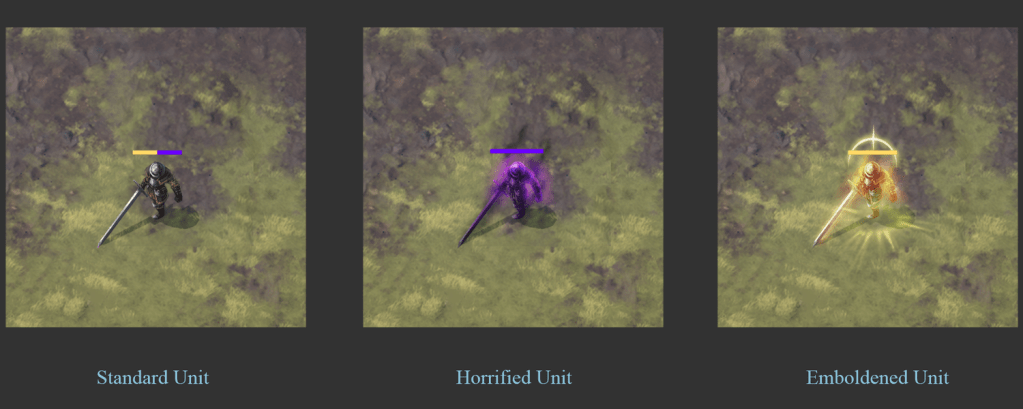
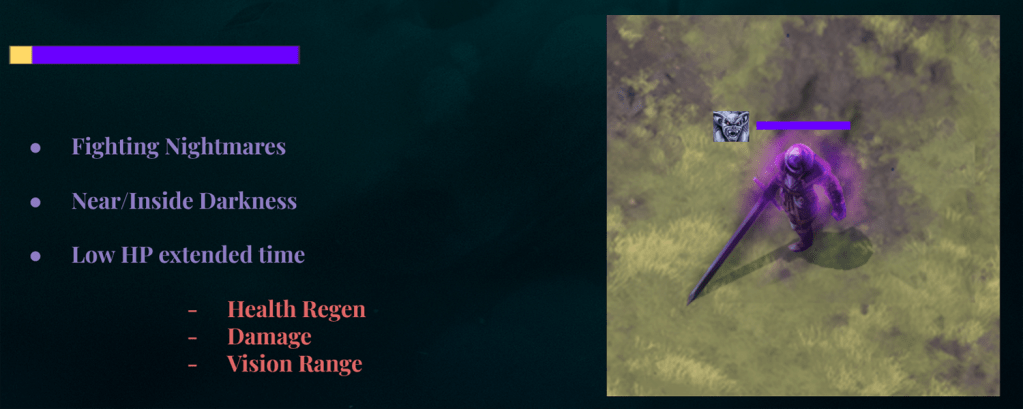
In an effort to add more gravitas, tension, and depth, I designed a game mechanic called Horror. Horror also tied well thematically to what the player was experiencing, especially during Night Time and Death Nights. Horror and Horror-based effects are always signaled with the color purple.
Units can become Horrified if they stray into the Death Fog, and some Nightmare enemies in the game have attacks that cause Horror. Horrified Units are less effective and have potentially roll-on effects on the army if left unattended. While exploring and battling, players can use their micro skills to avoid becoming Horrified. Light Towers can also be built to cure Units of Horror.
Units that slay enough enemies can gain a powerful buff called Emboldened. Emboldened Units gain some useful stat bonuses, but more importantly become immune to Horror. This is especially important for melee Units that are always at higher risk of Horror.
Later in development, a new Faction called the Volatists were released. They have the means to turn Horror into their advantage, adding further depth to the mechanic.


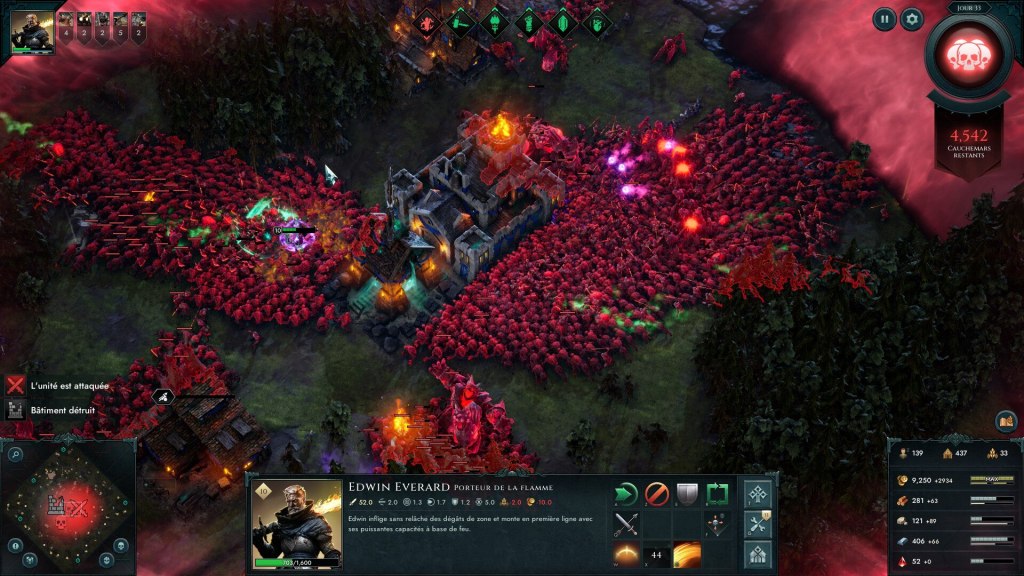
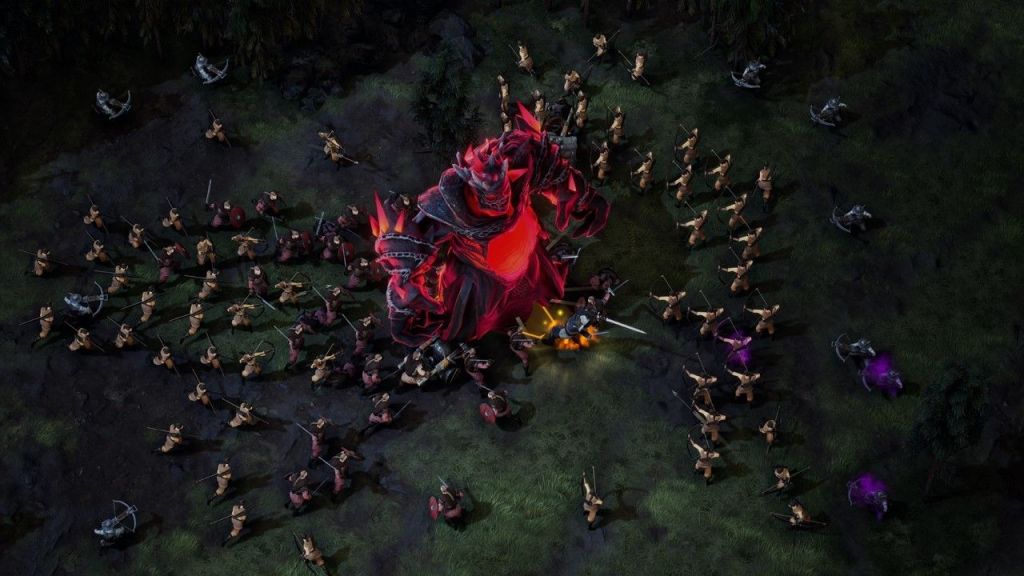
I wanted the conflict between Humans and Nightmares to have a tertiary escalation, so I designed a new layer of power in the form of Dark Essence, Dark Crystals, and Elite Nightmares. It was important for this layer to feel above the normal layer, yet within the same world, so we contrasted the Nightmare green with a deep pinkish red. This ended up having fantastic ramifications in the Story Campaign, and for Heroes like Vizargo, the Veil’s Claw.
Elite Nightmares are super-powerful entities that randomly roam the map. Players can choose to avoid, or engage them. Defeating Elite Nightmares grants nearby Units heaps of experience and resources, but they’re always a tough battle. Elite Nightmares are generally placed near choke-points as a light gating mechanic to access further parts of the map.
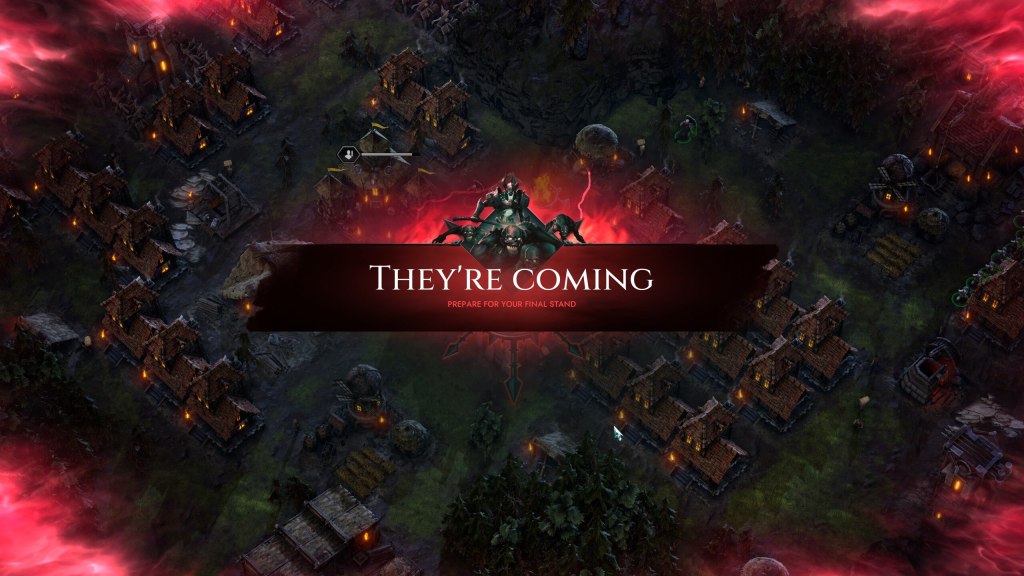
For a bit of fun (and secret Lore reasons!), during the Final Death Night, the fog and all Nightmares gain the red hue and become slightly stronger. It’s a great way to shock players at the end of a long Survival.
 Sean Gabriel