
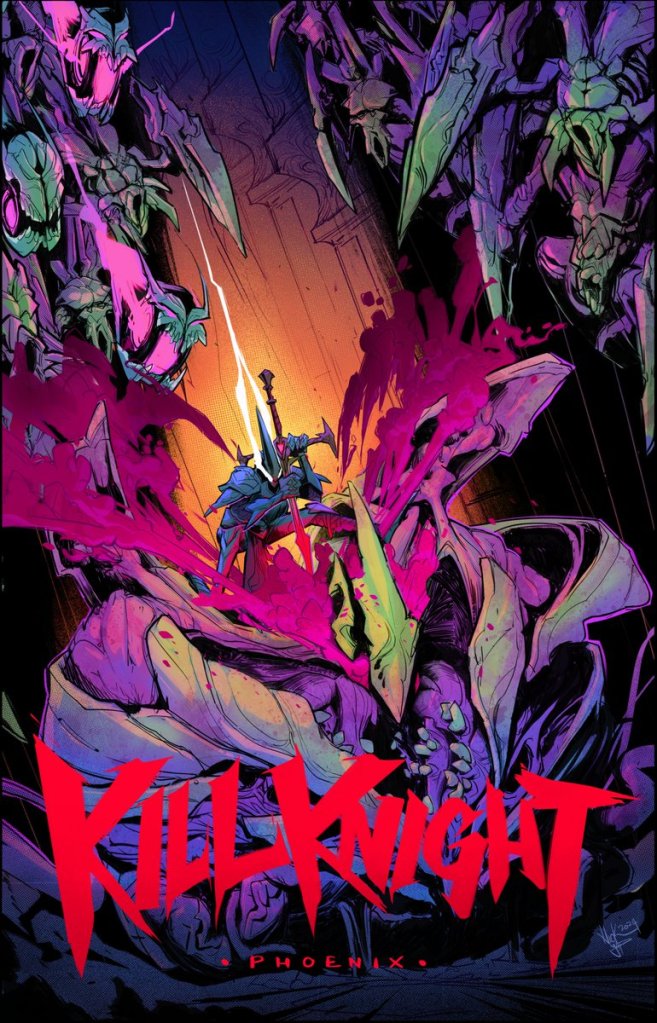
I was the Game Director & Lead Game Designer on KILL KNIGHT and managed a team of 12 over a one year period as part of “Team Phoenix” – a small strike team within Playside Studios tasked with reigniting the studio’s passion to make great games.
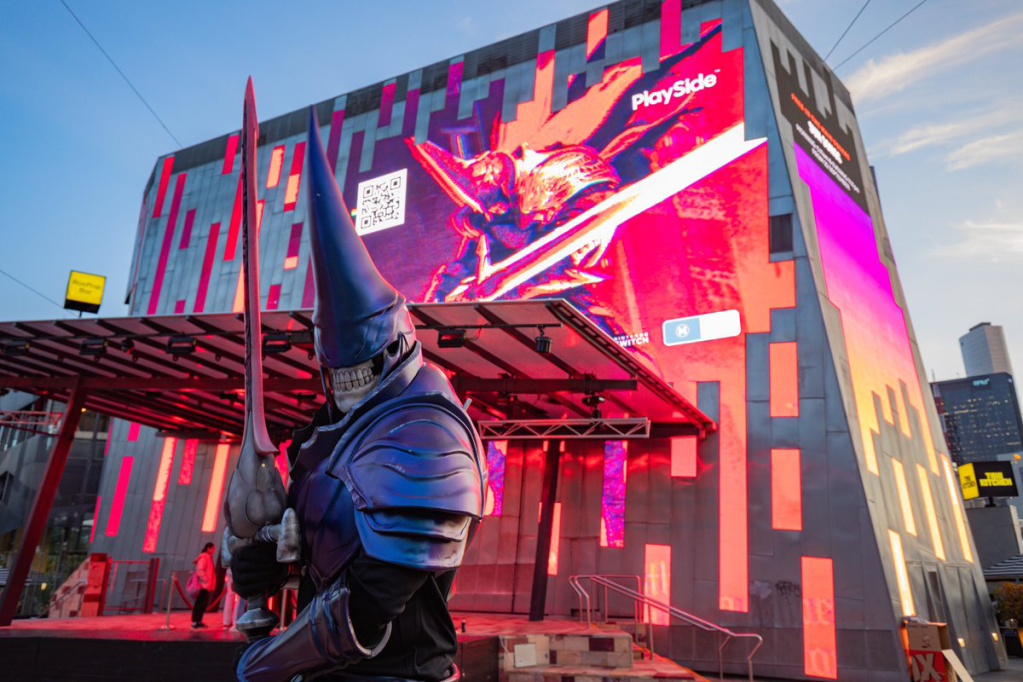
KILL KNIGHT is highly reviewed on Steam, sim-shipped on all Consoles, and was downloaded over 8 Million times as part of an Epic Games Store giveaway shortly after release.
My work included;
- Overall Creative Direction
- Pitching & Managing stakeholder expectations
- Working close with Artists, Designers, Audio & Coders to execute a high polish, despite low fidelity
- Complete Combat Mechanics & Systems design
- Final say on Game Feel, Controls, Difficulty
- Designing all content, Enemies, Final Boss Fight, Weapons, Abilities
- Laying out scope & milestones to hit excruciatingly tight deadlines
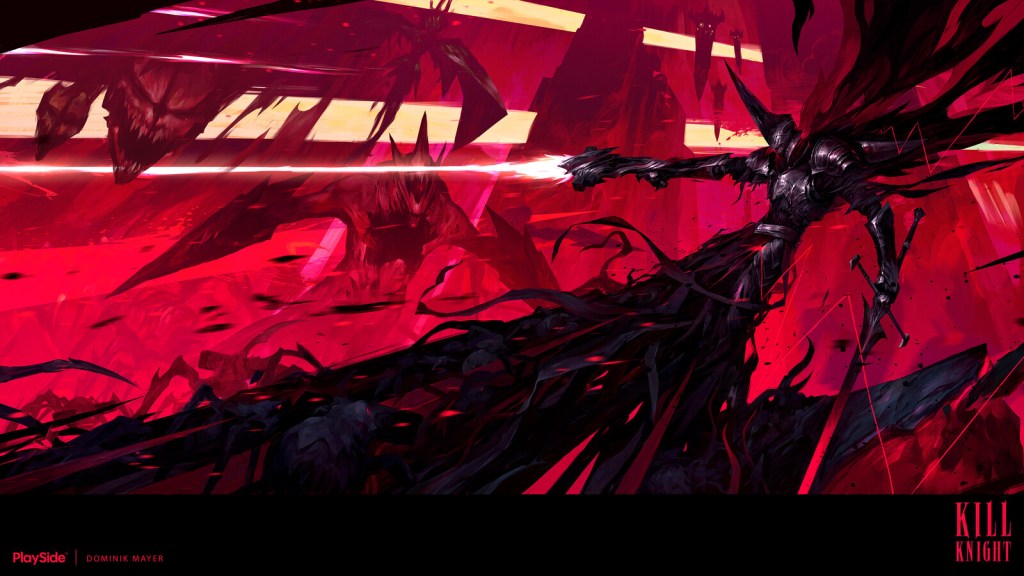
- World Building
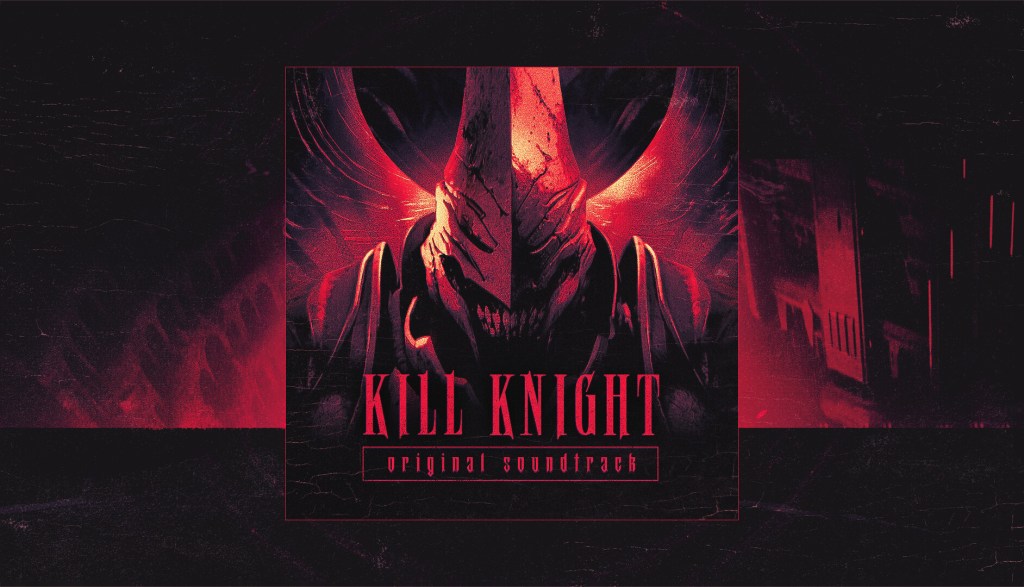
- Music & Branding Direction
- Trailer editing
- Much more

KILL KNIGHT had one mission; “Ship a highly rated PC/Console game in one year”.
An incredible challenge that, if successful, would provide the company with a game it could use to attract higher quality games to the Publishing division, and show everyone in the studio what can be done when creative developers fully immerse themselves into an exciting project. I’m incredibly proud of the small team that rallied together to execute this vision.
Playside Studios has since adopted many of our procedures and ways of thinking into the development of their other games – and many new hires cite KILL KNIGHT as the reason they were interested in joining the company.

Digging out the core combat loop of KILL KNIGHT was my immediate and most critical step. From character concepting I’d established the basics – a set of Pistols for default damage, Heavy Weapons for high powered problem solving, and the Sword for utility and defense – but getting them to interact elegantly and coherently was the design challenge.
Most important though was my philosophy of “Freeze Frame Decisions”. The idea being that at any moment, if you paused the game, there should be several high value, optimal, yet different things the player could do in the next second. No dominant strategies. A cascading flow chart of genuinely tough decisions happening second after second. This philosophy would ensure that – combined with all the different enemies, levels, and fast paced problems coming at the player – chasing high scores & speedrunning would have near endless depth.
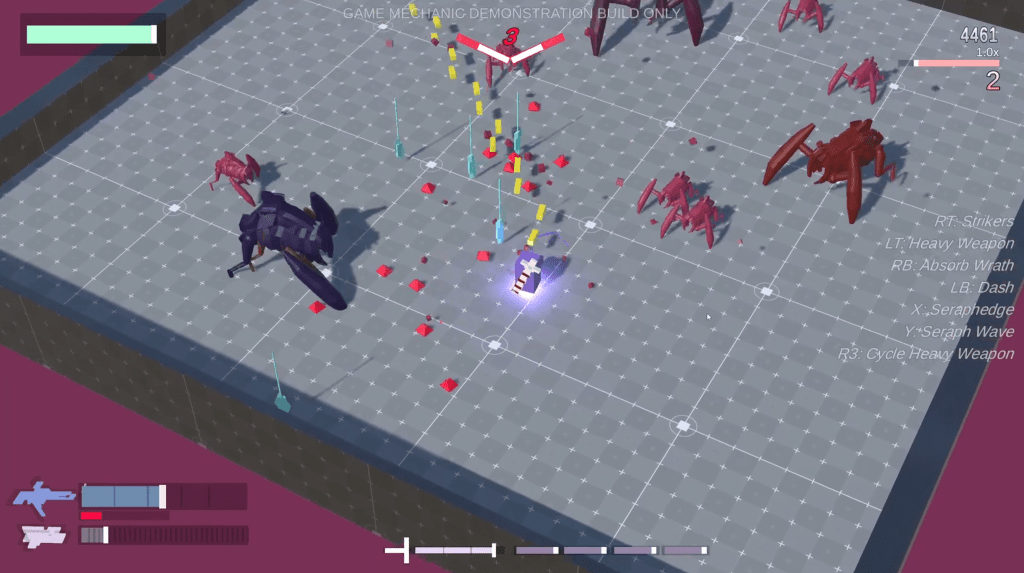
Over the course of prototyping, we explored more than twenty different combat loops, experimenting with mechanics like heat gauges for Heavy Weapons, devil-trigger-like wrath states, tiered cooldown abilities, and alternative fire modes. Each Weapon going through a rigorous array of tests to find unique interactions to make them feel distinct, yet interconnected.
The first major breakthrough came while experimenting with the Blood Gems system. Originally they merely fueled Kill Power as a generic power resource – but our design philosophy of giving players multiple decisions at any given moment prompted drawing Blood Gems into your Heavy Weapon as well – giving rise to the “Wrath Burst”. This mechanic instantly became the heart of the combat loop.
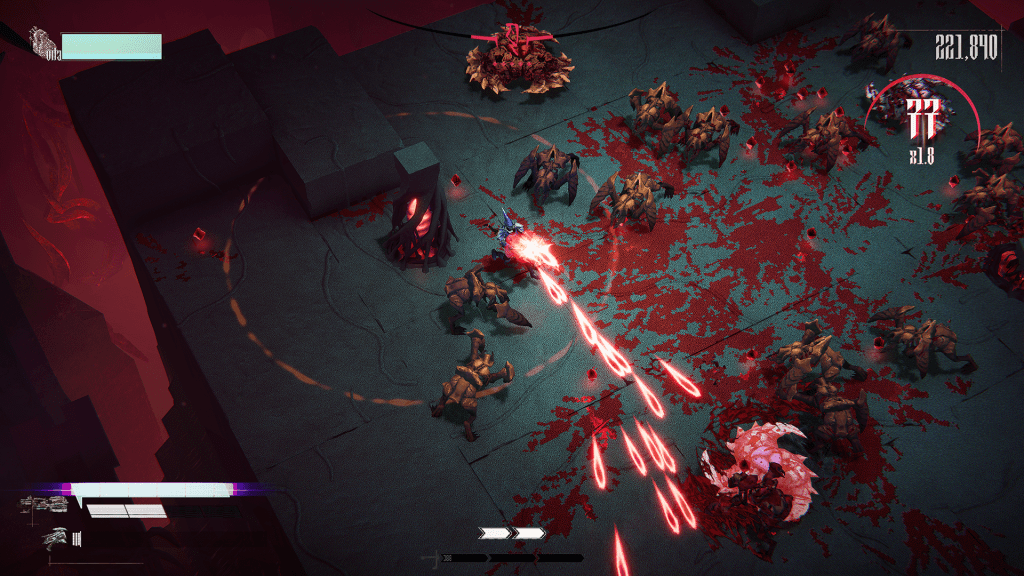
The second – and the moment we knew KILL KNIGHT had serious potential – was landing on the Active Trigger system. We’ve always loved Active Reloads, and felt not enough games have used them – but again, Freeze Frame Decisions put the pressure on us to iterate on the mechanic and give it multiple uses. At first glance it was ridiculous – all the Pistols & Swords need a unique mechanic just for this? But the prototype was undeniable, and the dev team was hooked – there was no backing out, so now you’ve got 3 ways to Reload.
From there, everything else began to click. Heavy Weapons, Swords, and Pistols all found purpose and synergy. Killing with the Sword generated Heavy Ammo, making every Weapon choice meaningful. Pistols featured Active Triggers to keep players attentive during downtime and widen the range of combat choices. These systems layered together to form a combat loop that was deep, exciting, and, most importantly, fun.

In KILL KNIGHT, the scoring system was designed as a behavioral engine, not just a series of numbers. From the beginning, I wanted the score to push players into engaging with all of the systems available. Points are weighted toward dangerous, high-commitment actions – aggressive positioning, weapon synergy chains, execution timing, and maintaining momentum under pressure.
The system deliberately favors players who stay engaged at close range and take calculated risks, rather than those who default to safe attrition. In that sense, score becomes instructional: it subtly communicates which behaviors the combat sandbox is built to support and pushes players toward deeper mastery of its systems.
The Carnage meter sits at the heart of this philosophy. Carnage accumulates fastest when players sustain intensity – chaining kills, rotating weapons intelligently, avoiding damage, and converting chaos into control. The goal was to create a feedback loop where bold play is immediately reinforced, teaching through amplification rather than tutorialization.
As Carnage rises, so does both scoring potential and player agency within the encounter, transforming combat into a deliberate act of escalation. It’s a system that rewards composure under pressure and promotes creative, high-skill play by making risk taking the most optimal.
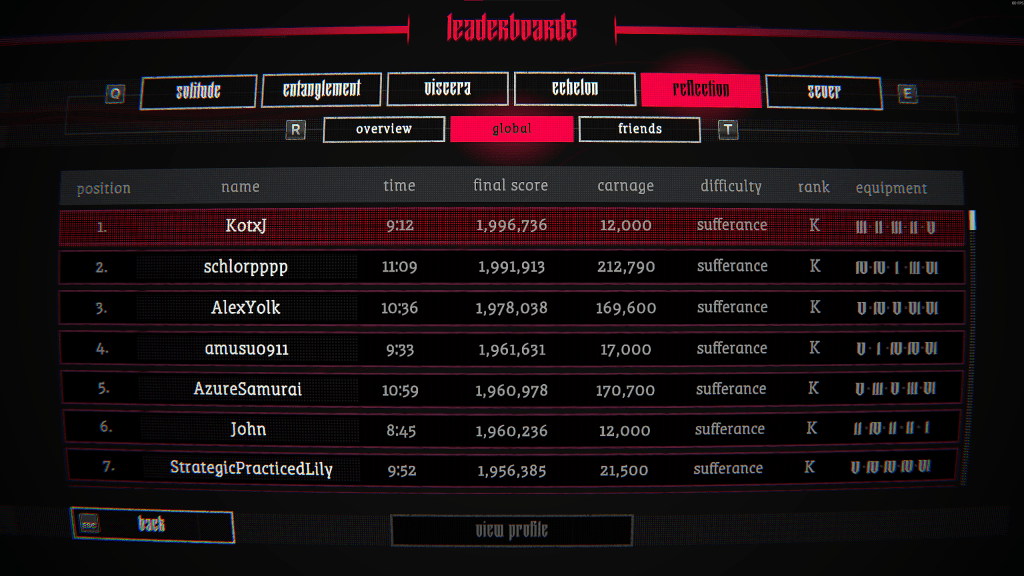
Carnage Score was the final flourish of the scoring system and tasking players with mapping out how to acquire the most Carnage while still beating levels quickly added an incredible amount of depth to the game.

Every piece of Equipment was designed as an extension of the combat system and not just interchangeable stat upgrades. Every pistol, heavy weapon, sword, armor set, and augment had to justify its existence by offering a distinct way to engage with positioning, timing, and risk/reward.
Pistols emphasize tempo and movement, heavy weapons demand commitment and space control, and swords reward rhythm and proximity management. Armor reshapes a player’s tolerance for risk, while augments act as behavioral amplifiers – reinforcing aggression, enabling control, or rewarding restraint. From the outset, the goal was clarity of identity, and each piece of equipment needed to create a recognizable shift in how the game is played.
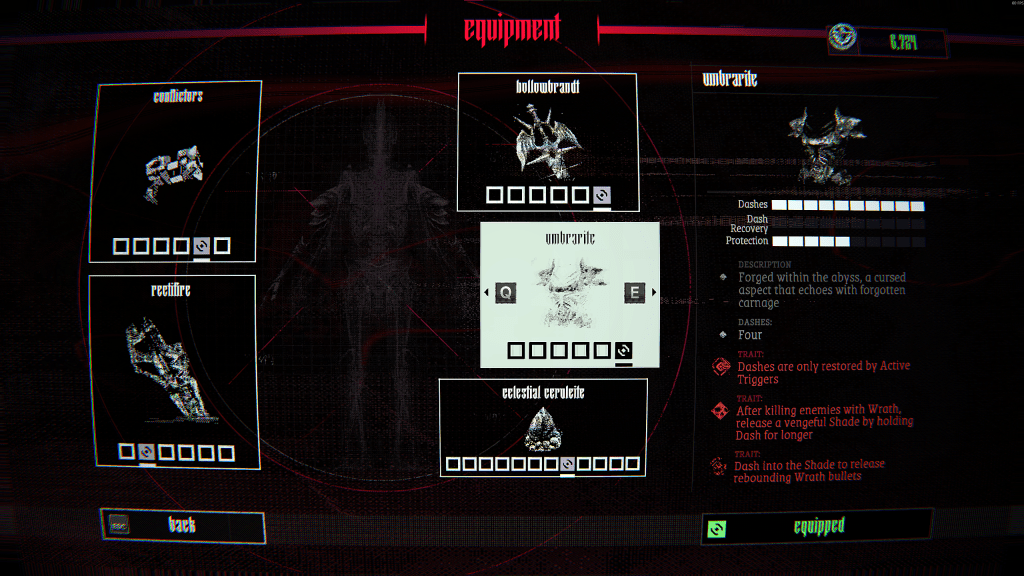
Balance was achieved by anchoring gear firmly to the core combat mechanics. High-damage weapons carry recovery costs that reshape engagement strategy; defensive loadouts trade burst potential for stability; aggressive builds amplify scoring and Carnage generation at the cost of survivability. We explicity set out to avoid creating a dominant meta build – instead we focused on contextual strength, ensuring that viability emerged from player expression and skill rather than stat optimization.
The result is visible across the leaderboards: no single loadout defines high-level play. Players continue to succeed with diverse equipment combinations, confirming that the arsenal supports multiple competitive playstyles rather than funneling everyone toward a single “correct” build.
 Sean Gabriel